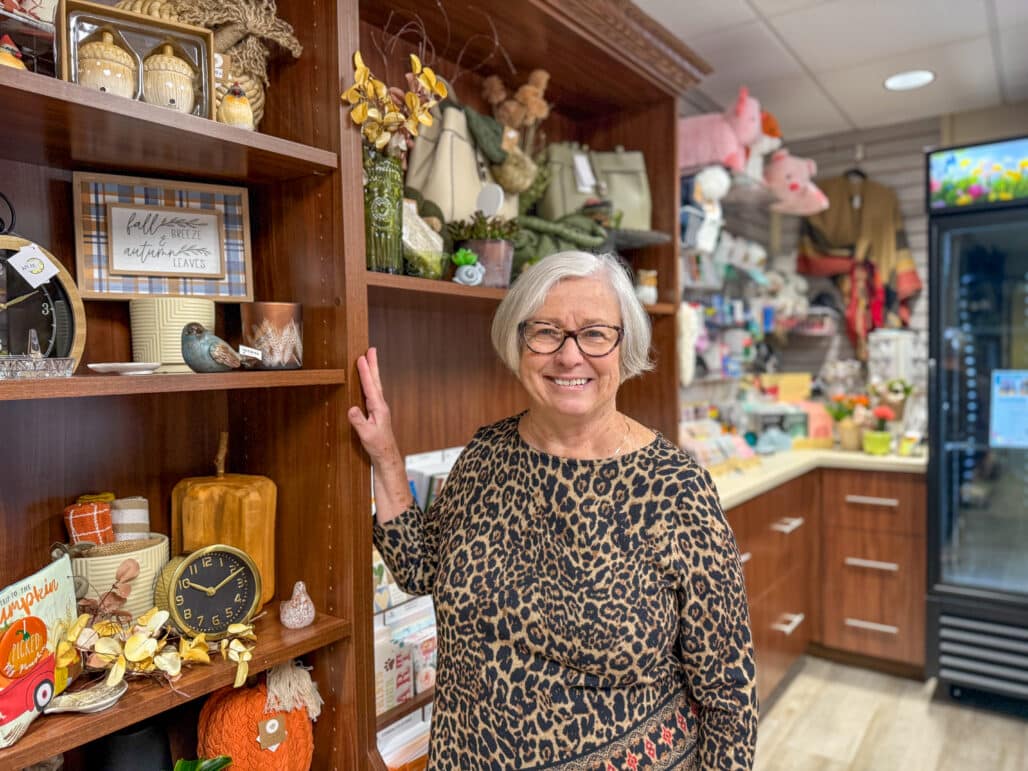

For Eileen Busse, her hyperbaric oxygen (HBO) therapy journey began after amputation, when a wound on her left leg didn’t improve despite months of care at home. With a diagnosis of chronic refractory osteomyelitis, Eileen became a candidate for hyperbaric
oxygen therapy.
“I was nervous going in for the first time, but they always helped me feel at ease,” said Eileen. “Once I got into the chamber, my nerves calmed and I knew I would be ok.”
After completing 49 treatments, her infection resolved and her wound showed significant improvement.
Throughout her treatment, Eileen returned regularly for wound care sessions, getting to know the team and becoming more comfortable with the process each day. Over time, that experience became more than just treatment, building a relationship based on trust and care as she got to know the team supporting her.
“I got used to seeing staff in the Wound Center every day,” said Eileen. “After my treatment ended, if I had an appointment in another department, I’d stop in to the Wound Center just to say hi. You get to know them, talk with them about your families, and you really miss them once your treatment ends. It’s just a great bunch here.”
Not only did Eileen often stop by to catch up, she’d frequently bring in baked goods to share with the Wound Center staff.
“They treat me, so I treat them,” said Eileen.
A is for Accelerated Healing
Hyperbaric oxygen (HBO) therapy helps wounds heal faster by increasing air pressure inside a specialized chamber, allowing patients to breathe a higher level of oxygen than usual. This oxygen is carried through the bloodstream to areas with poor circulation, helping reduce inflammation and promote healing.
“Hyperbaric oxygen therapy supports wound healing, fights infection, and helps the body repair damaged tissue by delivering high levels of oxygen to areas that need it most,” said Wound Center RN Case Manager, Jamie Yurek, BSN, RN.
B is for Bariatric Chambers
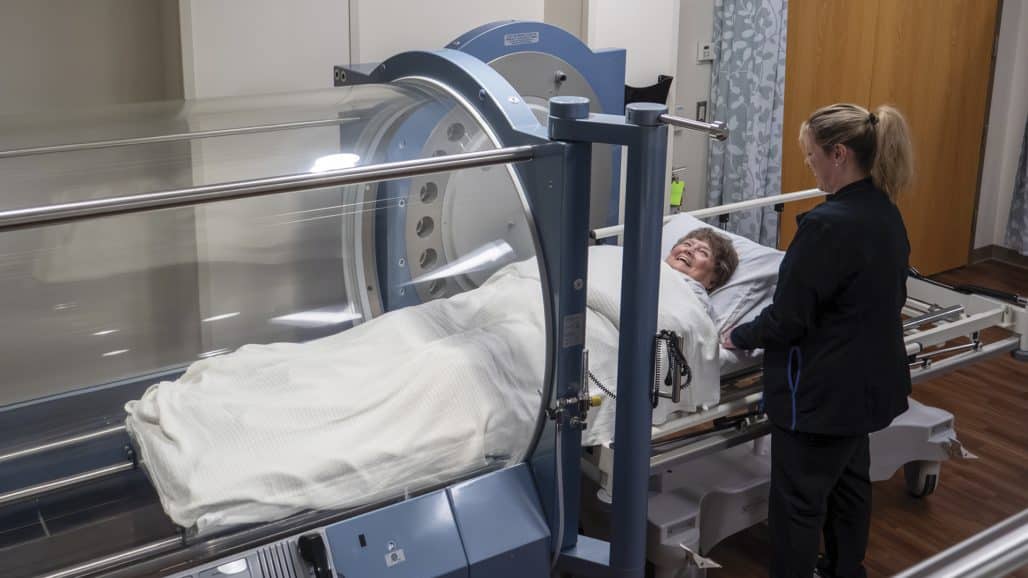
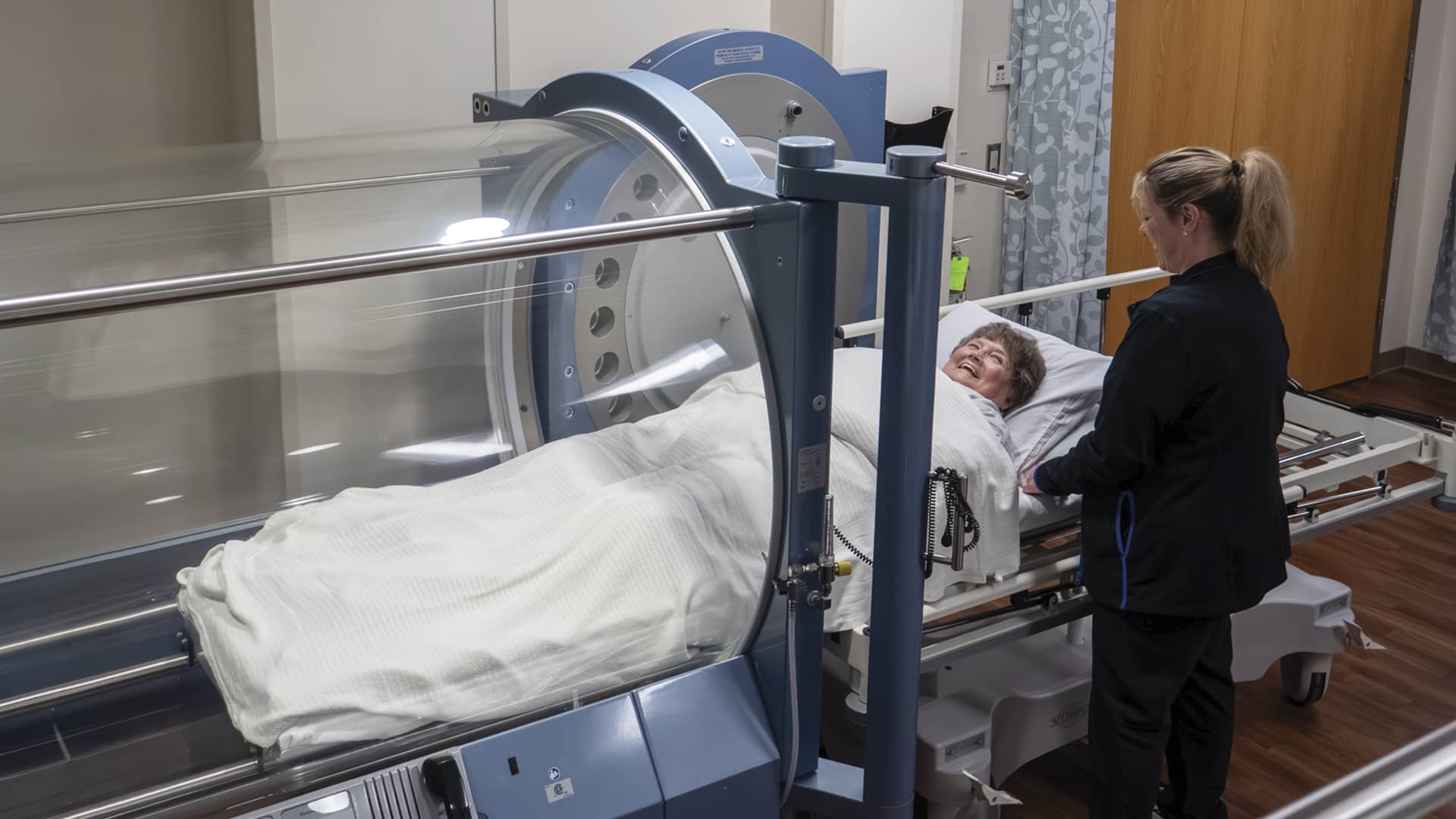
Patients receive treatment in a bariatric hyperbaric chamber, designed with extra space for our patients’ comfort. The clear design allows patients to see outside the chamber during treatment, helping reduce feelings of being closed in. While in the bariatric chambers for treatment, patients can relax, watch TV, listen to music, or even sleep during the approximately two-hour session, while a technician always remains nearby and available.
“Bariatric chambers aren’t available at every Wound Center, but we chose to offer them so we can safely care for patients who cannot be treated in standard chambers, while also providing a more spacious environment that helps reduce discomfort or feelings of claustrophobia,” said Wound Center Director Ashley Cohrs, MSN, RN.
C is for Consistent Care
Because healing takes time, consistency is an important part of therapy. Most treatment plans include multiple sessions each week over the course of several weeks, allowing patients to build on progress from one session to the next, while our team monitors healing and supports patients through their journey. This steady approach helps wounds respond more effectively to treatment.
“HBO therapy is not a one-and-done treatment,” said Jamie. “It’s more like a course of medication. Patients often need 20, 30, or more treatments, and consistency plays a key role in how effective therapy is.”
Care from A to Z
At GRH, hyperbaric oxygen therapy is not just an advanced treatment option – it’s a way we can support patients throughout every step of the healing process. With a focus on comfort, connection, and care, our patients can feel confident they’re not facing their recovery alone.
To learn more about HBO therapy click here.